Does Invisalign Hurt? What New Patients Should Expect
If you're weighing Invisalign, the honest answer is this: mild pressure and soreness in the first few days of a new tray is normal, and it fades. Sharp pain, a tooth that throbs on its own, or discomfort that lingers for weeks is not normal, and it's worth a call to your dentist. The rest of this guide walks through why the pressure happens, how long it typically lasts, how it compares to traditional braces, and what actually helps.
It's also worth saying up front that Invisalign isn't only an orthodontist's tool anymore. General and cosmetic dentists run Invisalign programs of their own, often alongside veneers, whitening and other smile work, which means you can get a straightening plan and a broader look at your smile in the same visit rather than juggling two different offices.
How Much Does Invisalign Hurt, and Why
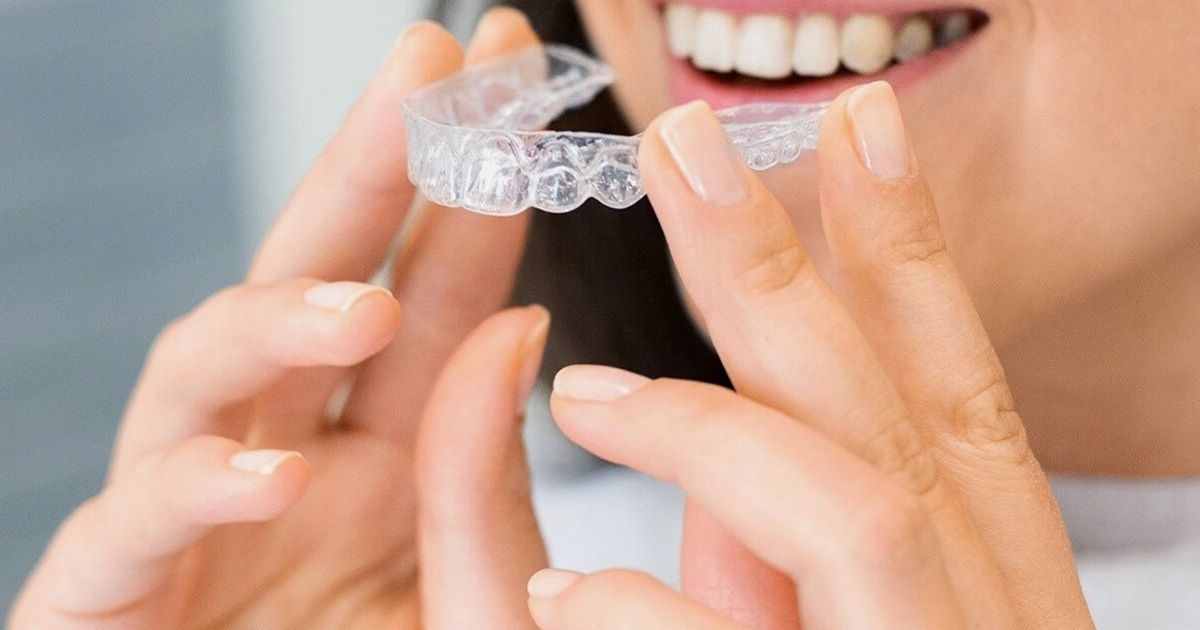
Each new aligner in your series is shaped very slightly ahead of where your teeth currently sit — that's the entire mechanism behind Invisalign. The tray applies gentle, continuous force to nudge a tooth a fraction of a millimeter in a particular direction, and your first day or two wearing it is when that force is doing the most work. That's when you'll feel it: a dull, tight ache, sometimes described as pressure rather than sharp pain, most noticeable when you bite down or when the tray first goes back in after a meal.
This is the invisalign discomfort most new patients describe, and it's genuinely a sign the treatment is doing its job rather than a problem. Separately, some patients get small tooth-colored attachments bonded to certain teeth to help the aligner grip and apply force more precisely. These little bumps can rub the inside of the cheek or lip for the first few days of wear, which feels different from tooth pressure — more of an irritation than an ache — and it settles down once your mouth adjusts to the new texture, usually within a week.
How Long Does Invisalign Discomfort Last?
Is Invisalign painful for the whole time you're wearing a given tray, or just at the start? For most patients, the pattern is predictable: pressure peaks in the first one to three days after switching to a new aligner, then tapers off steadily, and by the end of the first week most of the noticeable soreness is gone. A smaller number of patients report mild lingering sensitivity — teeth feeling slightly tender when biting into something firm — that can stretch a few days longer, but it should not still be a real problem two weeks into wearing that tray.
Because you'll typically move to a new tray every one to two weeks throughout treatment, this cycle repeats each time, but it tends to get milder as your mouth gets used to the rhythm of periodic pressure. If you're finding that discomfort is building rather than fading, or that it's just as sharp on day ten as it was on day one, that's outside the normal pattern and worth flagging to your dentist rather than pushing through.
Is Invisalign Less Painful Than Braces?
This is one of the more genuinely useful things to know before you choose between the two, and the clinical research is fairly consistent on it. A randomized trial published in The Angle Orthodontist found that patients treated with traditional fixed braces reported greater discomfort overall and used more pain medication than patients treated with clear aligners, with the gap most pronounced in the early weeks of treatment. A separate study in Progress in Orthodontics comparing Invisalign patients against those in fixed edgewise appliances found lower reported pain levels in the aligner group, particularly during the initial stages of treatment.
The likely explanation is mechanical. Braces apply continuous force through wires and brackets that get tightened at each adjustment visit, creating a fresh spike of pressure every few weeks along with the ongoing irritation of hardware against soft tissue. Aligners deliver a smaller, more evenly distributed force through a smooth plastic tray you swap out yourself, without the metal edges that tend to cause the mouth sores associated with braces. None of this means Invisalign is pain-free — it isn't — but for patients deciding between the two options purely on comfort, the research leans clearly toward aligners.
Tips to Ease Invisalign Soreness
A few small habits make the adjustment period noticeably more comfortable:
- Put each new tray in right before bed, so the sharpest day of pressure passes largely while you're asleep.
- Take an over-the-counter pain reliever like ibuprofen as directed if soreness is bothering you, especially on the first day of a new tray.
- Stick to soft, cool foods — yogurt, smoothies, soup — for the first day or two after a switch, when biting pressure is most noticeable.
- Keep a small piece of orthodontic wax on hand for any spot where an attachment or the tray's edge is rubbing.
- Wear your aligners the full 20 to 22 hours a day. Taking them out too often lets teeth drift back slightly, which means the next tray has to work harder and the soreness cycle restarts.
When Invisalign Pain Isn't Normal
Most discomfort during Invisalign treatment is mild and short-lived, but a few signs mean it's time to call your dentist rather than wait it out:
- Sharp or throbbing pain focused on one specific tooth, rather than general pressure across several teeth.
- Discomfort that hasn't eased up after two weeks with the same tray.
- Gums that are swollen, bleeding beyond the usual flossing irritation, or visibly inflamed.
- A sore spot or ulcer from a rough tray edge that isn't improving with wax or is getting worse.
- Any tooth that feels loose or shifts in a way that concerns you.
None of these are common, and none of them mean something has gone seriously wrong — they're simply signals that your dentist should take a look and make a small adjustment before you keep going. Waiting it out is rarely the right move when something feels genuinely off, so it's always worth the phone call.
Getting Started with Invisalign in Westport
Invisalign is one part of the cosmetic dentistry we offer at Esthetic Dental Group, alongside the digital imaging and scanning technology that lets us map out your treatment plan in detail before your first tray is ever made. A consultation is the best place to get a realistic sense of what your specific case will feel like, including how much movement your plan calls for and what kind of comfort timeline to expect. If you're weighing Invisalign as an option, we're happy to walk through it with you and set expectations honestly from day one.